
The classic
Vicenza, Palladio's city
Teatro Olimpico, Corso Palladio, Santa Corona and the Basilica Palladiana on Piazza dei Signori: the essential walking tour for understanding Vicenza.
Discover the tour
Private guided tour · About 2.5 hours
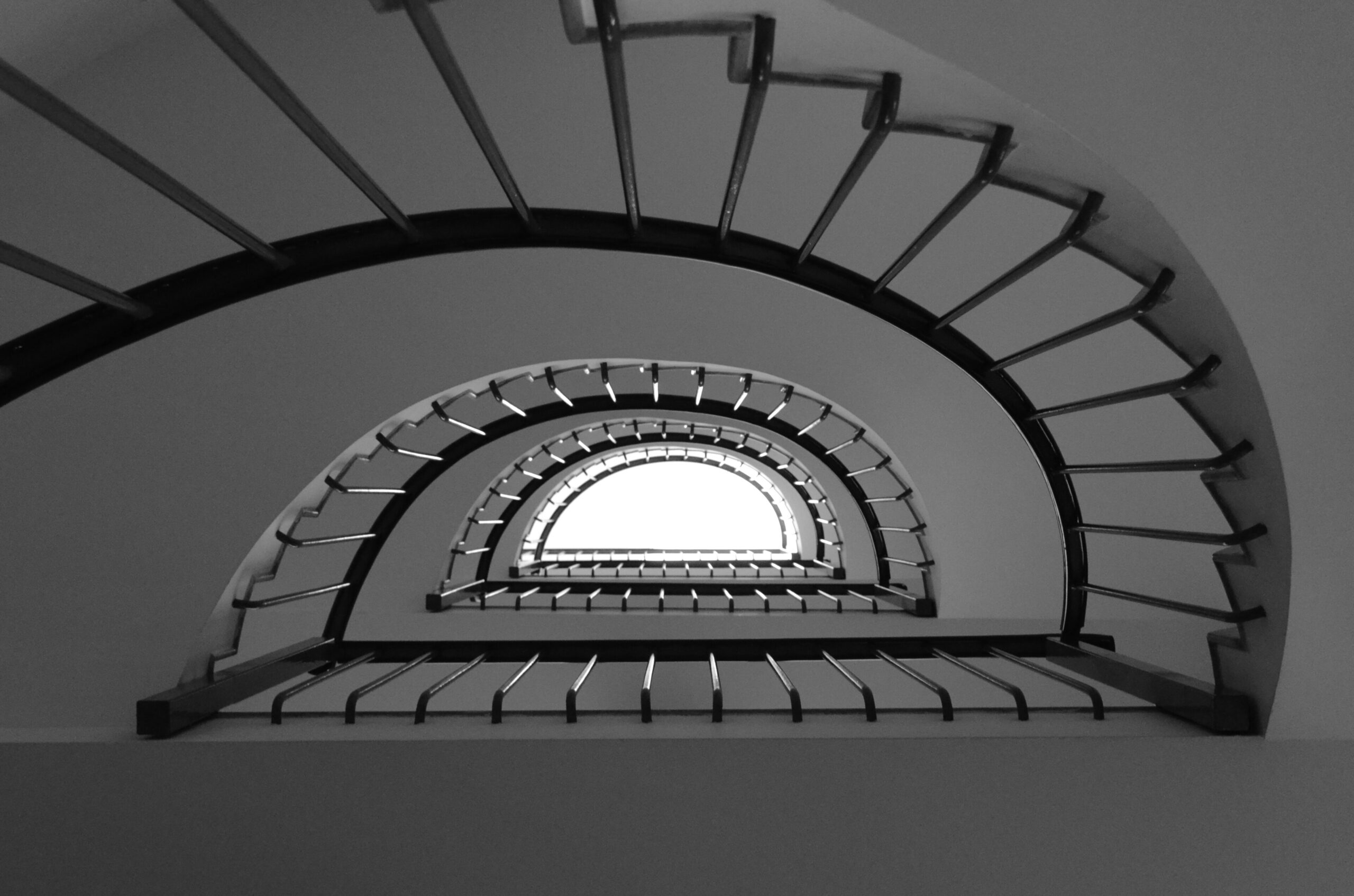
A walk through twentieth-century architecture in Vicenza, following in the footsteps of the great Venetian master who spent his childhood here and came back to live in the city in his final years.
At a glance
Carlo Scarpa left little-known but outstanding work in Vicenza, such as the Condominio Borgo in contrà del Quartiere (1974-79) and the interiors of Casa Gallo (1962). The private tour of about 2.5 hours, on foot in the historic centre, tells the story of the architect's bond with the city and his dialogue with Palladio. It is aimed at architects, students and design enthusiasts; many of the works are private and are seen from the outside.
Practical information
Carlo Scarpa (Venice, 1906 – Sendai, Japan, 1978) is one of the leading figures of twentieth-century Italian architecture: a master of detail, of light, of materials worked as if in a craftsman's workshop. He trained at the Accademia di Belle Arti in Venice, worked for many years with the Murano glassworks and created museum installations and buildings that are now studied all over the world.
His bond with Vicenza began early: the family moved here when Carlo was about two and stayed until his mother's death, when the thirteen-year-old returned to Venice with his father and brother. The Palladio Museum recalls that as a child he played beneath the portico of Palazzo Chiericati. In 1972 Scarpa came back to live in Vicenza, where he had a home until his death in 1978.

The route
The route adapts to the works that are actually accessible at the time of your visit.
We start where it all began: beneath Palladio's loggias where Scarpa played as a child. Here we introduce the themes of the walk: classical proportion, light, and the relationship between building and public space.
Designed in 1974 and built between 1975 and 1979 with his collaborator Francesco Guiotto, it was completed after the architect's death. It is Scarpa's only apartment building: we will look at the recessed entrance with its water garden, the red-painted steel beams and capitals, the concrete bands separating the floors and the asymmetrically placed windows. A private residential building, seen from the outside.
An interior design project, now private, that reveals Scarpa at his most intimate: care for materials, bespoke furniture, finely judged light. We discuss it through drawings and images, and see it at close quarters only on special openings.
In the 1970s Scarpa also worked in Vicenza on Villa Matteazzi Chiesa (1974-75), Villa Zileri (1975-76) and the interiors of Casa Golin (1977), as well as an unbuilt design for a new city theatre (1968-69). These are private or never-built works: we will place them in the context of the city, pointing out what can and cannot be seen.
We finish by returning to the Palladian monuments, to compare, a few steps apart, two ways of understanding classicism: the Renaissance rule and its modern reinterpretation.
What do a sixteenth-century architect and a twentieth-century one have in common? More than you might think. Both work with Venetian stone and plaster, both study antiquity, both conceive the building as a system of proportions and light. But where Palladio seeks rule and symmetry, Scarpa breaks symmetry, takes things apart, and emphasises the joints and transitions between one material and another.
Vicenza is the ideal place to see this comparison in real life: the city that Palladio transformed in the Renaissance is the same one in which Scarpa grew up and where he left some of his last works. During the visit we will use the Palladian façades as a key to reading Scarpa's details, and vice versa.
Before you book
Who it's for
A chance to see a little-known residential work by Scarpa in real life and compare it with Palladio.
Routes for university groups and classes in architecture, design and art history.
For those who love materials, details and twentieth-century design culture.
Frequently asked questions
The main ones are the Condominio Borgo in contrà del Quartiere (1974-79) and the interiors of Casa Gallo (1962). Scarpa also worked on Villa Matteazzi Chiesa, Villa Zileri and the interiors of Casa Golin, all private works.
Generally not, because they are private homes. We look at them from the outside and explain them with drawings and images; if there are special openings during your visit, we will let you know.
Yes. His family moved to Vicenza when he was a child and he stayed until he was about thirteen, when he returned to Venice. In 1972 he settled in Vicenza again, where he lived until his death in 1978.
Yes. We can tailor content and length for architecture or design courses, agreeing in advance on the topics to explore.
Among the best known are the Brion Tomb at Altivole, the Gipsoteca Canoviana at Possagno, the Castelvecchio Museum in Verona and the Fondazione Querini Stampalia in Venice. We can advise you on how to plan an itinerary.
Booking request
Choose a date and the number of guests: you will receive a summary by email straight away, and Daniela will reply personally with availability and a written quote. The request is not yet a confirmed booking.
Keep exploring
To set Scarpa in dialogue with the Renaissance: the guided walking tour of the historic centre, Palladio's palazzi and all our guided tours of Vicenza.

The classic
Teatro Olimpico, Corso Palladio, Santa Corona and the Basilica Palladiana on Piazza dei Signori: the essential walking tour for understanding Vicenza.
Discover the tour
Architecture
Palazzo Thiene, Barbaran da Porto, Chiericati and the Loggia del Capitaniato: how Palladio redesigned the city of his patrons.
Discover the tour
Villas and Tiepolo
Palladio's most famous villa and the Tiepolo frescoes, linked by a green walk on the edge of the city.
Discover the tourPrivate visit
Tell us about your interests and when you plan to visit: we will build the route and send you a clear quote before you confirm.
What guests say
Excerpts from 5-star reviews published on TripAdvisor, quoted in the original Italian with an English translation. Full texts on the platform.
Palladio e Teatro Olimpico
«Lascia a bocca aperta.»
Translation: Leaves you speechless.
La Fabbrica del Rinascimento con Daniela
«Non ho staccato gli occhi un attimo e il tempo è volato.»
Translation: I never took my eyes off it and the time flew by.
Visita guidata alla mostra «La fabbrica del Rinascimento»
«Lei è molto competente, interessante e mai banale.»
Translation: She is very knowledgeable, interesting and never trite.
La Fabbrica del Rinascimento
«Spiegazioni chiare e precise.»
Translation: Clear and precise explanations.
Fine settimana di autunno
«Guide preparate con tour molto interessanti e ben illustrati.»
Translation: Well-prepared guides with very interesting, well-explained tours.
Figures taken from the platforms in October 2026. How we display reviews

Hello, I'm Daniela. Tell me when you are arriving in Vicenza and what you would like to see: I will reply with my availability and a clear proposal.
Message on WhatsAppFill in the enquiry formSend an emailCallThis site uses only strictly necessary technical tools (no analytics, no profiling). Cookie policy
GiraVicenza.it uses only the technical tools needed for the site to work. Non-essential categories are not in use: should they ever be activated, we will ask for your consent first.